
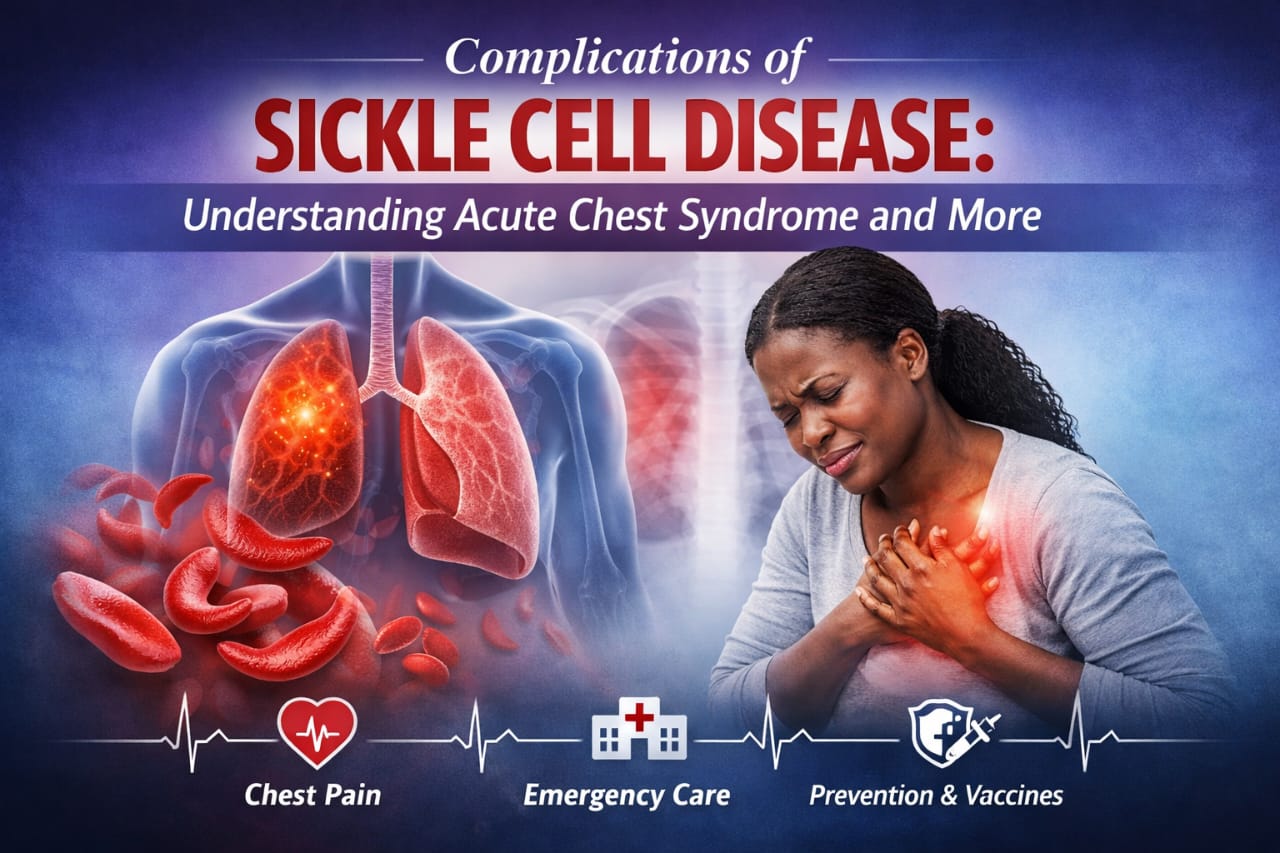
Sickle Cell Disease and Acute Chest Syndrome
Acute Chest Syndrome (ACS) is one of the serious complications of Sickle Cell Disease (SCD) and a leading cause of hospitalization among people living with the condition. It is a medical emergency that requires prompt diagnosis and treatment.
Chest pain in individuals with sickle cell disease can be caused by several conditions, including acute chest syndrome, pulmonary embolism, and severe infections. Because these conditions can quickly become life-threatening, chest pain should never be ignored.
Pediatrician Dr. Minette Akame Mbange advises caregivers and people living with sickle cell disease to seek immediate medical attention whenever a sickle cell warrior complains of chest pain. Early medical evaluation significantly reduces the risk of severe complications. This message was shared during the 2026 Care Before Crisis outreach in Yaoundé.
Managing Chest Pain in Sickle Cell Disease (ACS)
Chest pain in sickle cell disease may present with symptoms such as difficulty breathing, fever, cough, or fatigue. Prompt medical care is essential to determine the cause and begin appropriate treatment.
Caregivers are encouraged to avoid self-medication and instead prioritize early hospital visits whenever chest pain occurs. Timely intervention can prevent complications and save lives.
Massage and Pain Relief in Sickle Cell Disease
Massage therapy during a sickle cell pain crisis can sometimes provide temporary pain relief, especially when done gently. It is often performed using warm water, a warm towel, balm, or ointments.
During the 2026 Hope Cell Foundation Care Before Crisis sickle cell awareness campaign, caregivers asked questions about which balms or ointments are safest to use during massage.
Massage helps improve blood circulation in body tissues, which can contribute to pain reduction. However, doctors recommend using mild ointments with anti-inflammatory properties and avoiding strong or irritating products. Massage should always be gentle and stopped immediately if it causes discomfort or worsening pain.
This discussion highlighted the importance of proper guidance on safe home-based pain management for people living with sickle cell disease.
Vaccination and Infection Prevention in Sickle Cell Disease
People living with Sickle Cell Disease (SCD) require a specialized and expanded vaccination schedule to protect them from serious infections such as pneumonia, meningitis, and influenza. This increased risk of infection is due to weakened immune function, a condition known as functional asplenia.
Essential vaccines for people with sickle cell disease include:
Pneumococcal vaccines
Meningococcal vaccines
Hib vaccine
Annual influenza vaccine
Depending on individual risk factors, hepatitis B vaccination may also be recommended.
Vaccination usually begins in infancy and continues throughout life with booster doses. Preventive antibiotics, such as penicillin in young children, are also part of standard care to reduce the risk of severe infections.
Some of these vaccines are sometimes available free of charge or at subsidized rates through institutions such as the Yaoundé International Vaccination Center (CVIY).
This information was shared by Dr. Sulem Ingrid as part of the Care Before Crisis health tips during the Hope Cell Foundation sickle cell awareness campaign on January 17, 2026.
Education remains a powerful tool in reducing preventable complications. Through initiatives like the Care Before Crisis campaign, Hope Cell Foundation continues to empower caregivers, families, and sickle cell warriors with practical, lifesaving information.


Leave a Reply